Data Journalism Studio
We make data .
Elections
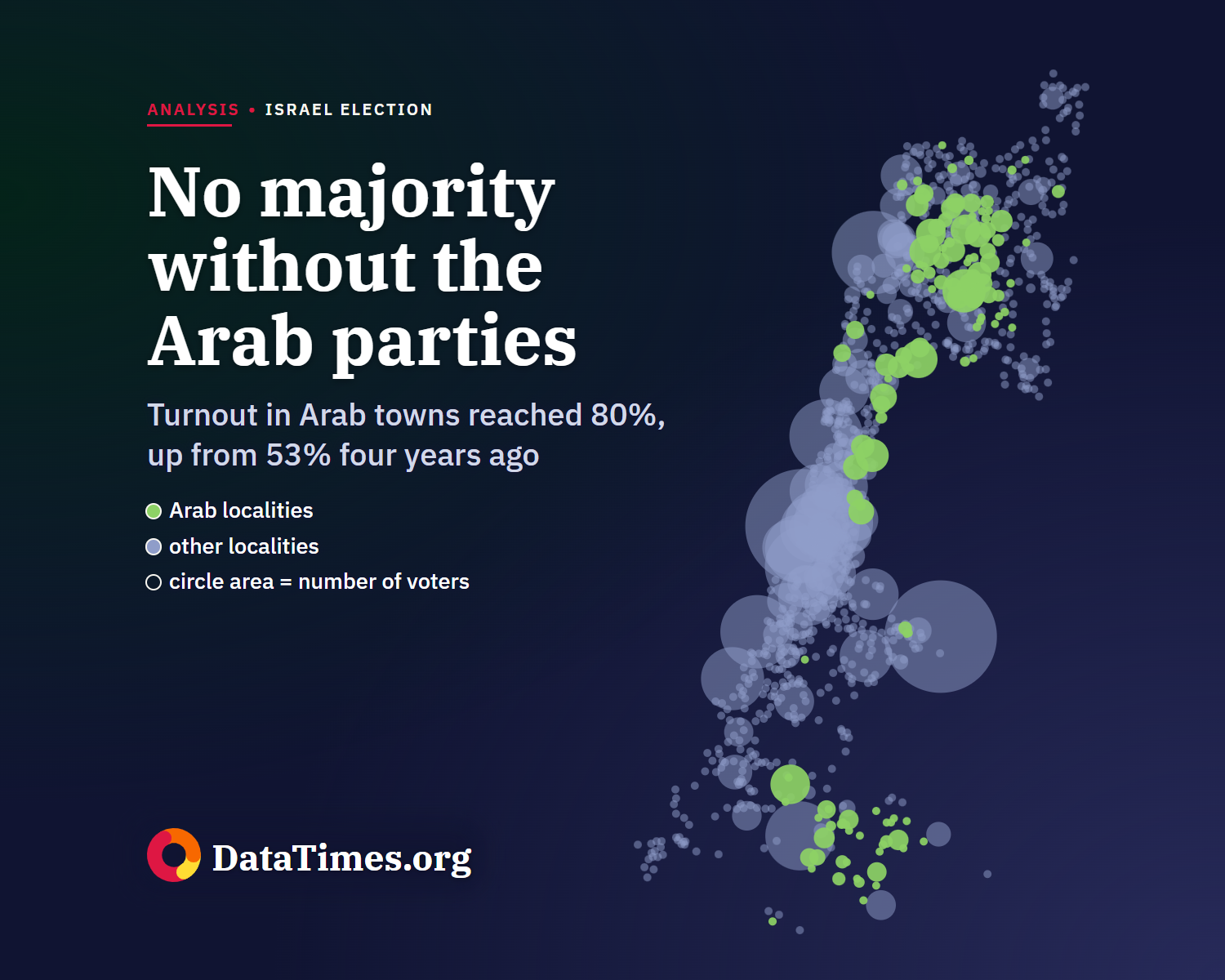
Israel's election has ended in deadlock. According to preliminary results, Netanyahu's bloc has 53 seats and Gadi Eisenkot's opposition 48. The Arab parties won 19 seats, the most in their history. Without them, nobody can form a majority; with them, almost nobody wants to govern. We look at who voted how, why Arab voters turned out and what comes next for Israel. Benjamin Netanyahu and his allies lost their majority in the Knesset, Israel's single-chamber parliament of 120 members, in the election of 27 October 2026. According to preliminary results from the Central Elections Committee, the five parties of his outgoing coalition hold 53 of the 120 seats between them, eleven fewer than in 2022. But the opposition led by former military chief of staff Gadi Eisenkot has no majority either: the four parties of its bloc won 48 seats. The remaining 19 seats went to two Arab parties, the Joint List and Ra'am. Arab parties have never held so many seats in the Israeli parliament; the previous record was 15 in 2020. Neither bloc can form a majority without them. Yet most Jewish parties refuse to govern with them. The figures are still preliminary. By Thursday the committee was counting more than half a million so-called double envelopes, used by soldiers, diplomats and people in hospital to vote, and it will announce the final results by 4 November. One or two seats may still shift, and one has already moved between the Arab parties. That should not change the fact that no bloc has a majority: Netanyahu is eight seats short, Eisenkot thirteen. A majority requires 61 members. Eisenkot's bloc – his party Yashar (21 seats), Beyachad (Together) led by Naftali Bennett and Yair Lapid (12), Yair Golan's Democrats (8) and Avigdor Liberman's Yisrael Beytenu (7) – would have 67 votes together with both Arab parties. But Liberman refuses to work with the Arab parties, and Eisenkot promises a government resting on a "Zionist majority". Without Liberman and with the Arab parties, the opposition has 60 votes.
28 October 2026

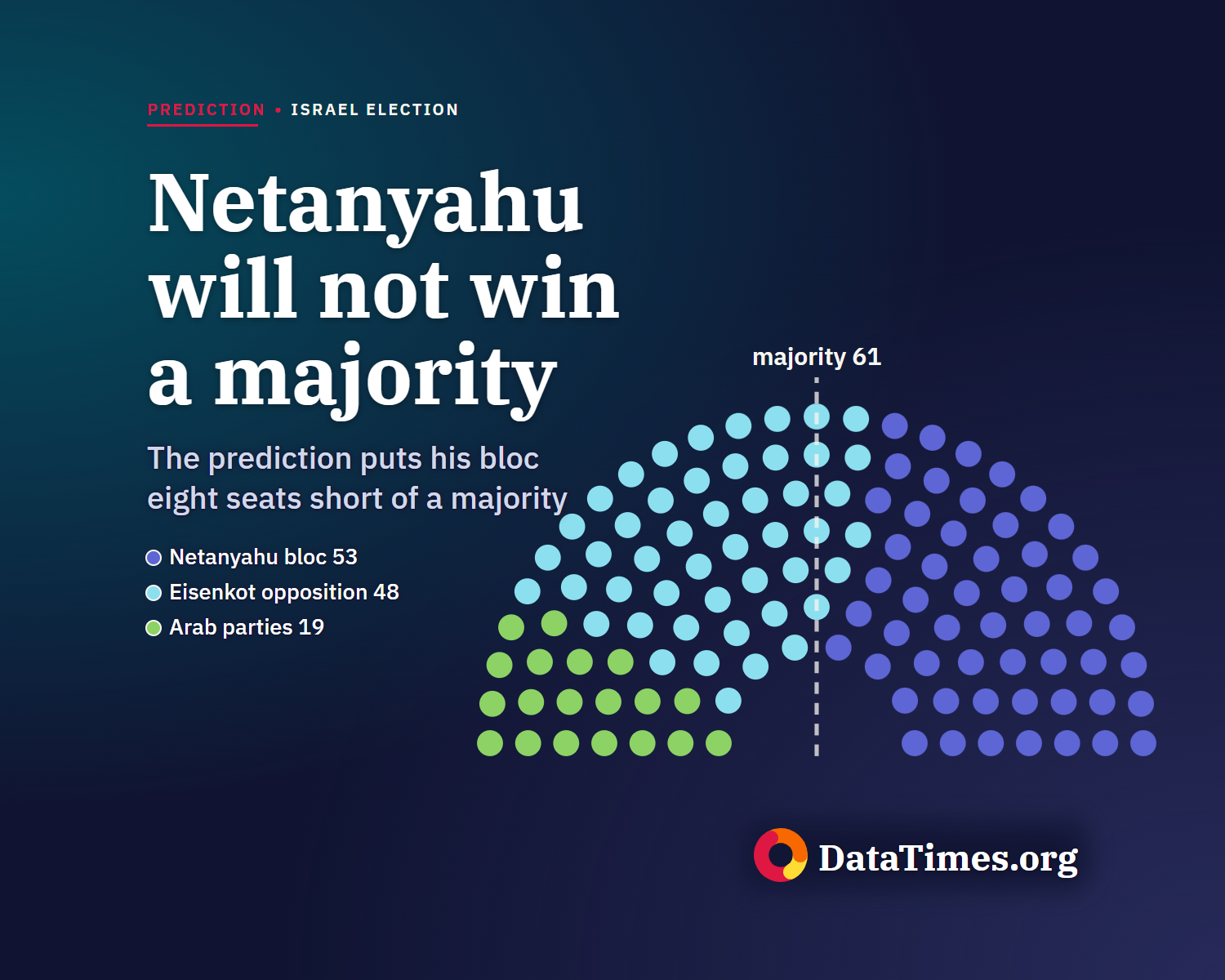
Pre-election polls put Eisenkot's Yashar in the lead, and the overnight running tally overstated Likud. From the first hour of the count, the DataTimes.cz prediction showed a stalemate: Netanyahu's bloc will end up with 53 seats, Gadi Eisenkot's opposition with 48, and the 19 members of the Arab parties will decide whether anyone has a majority.
27 October 2026

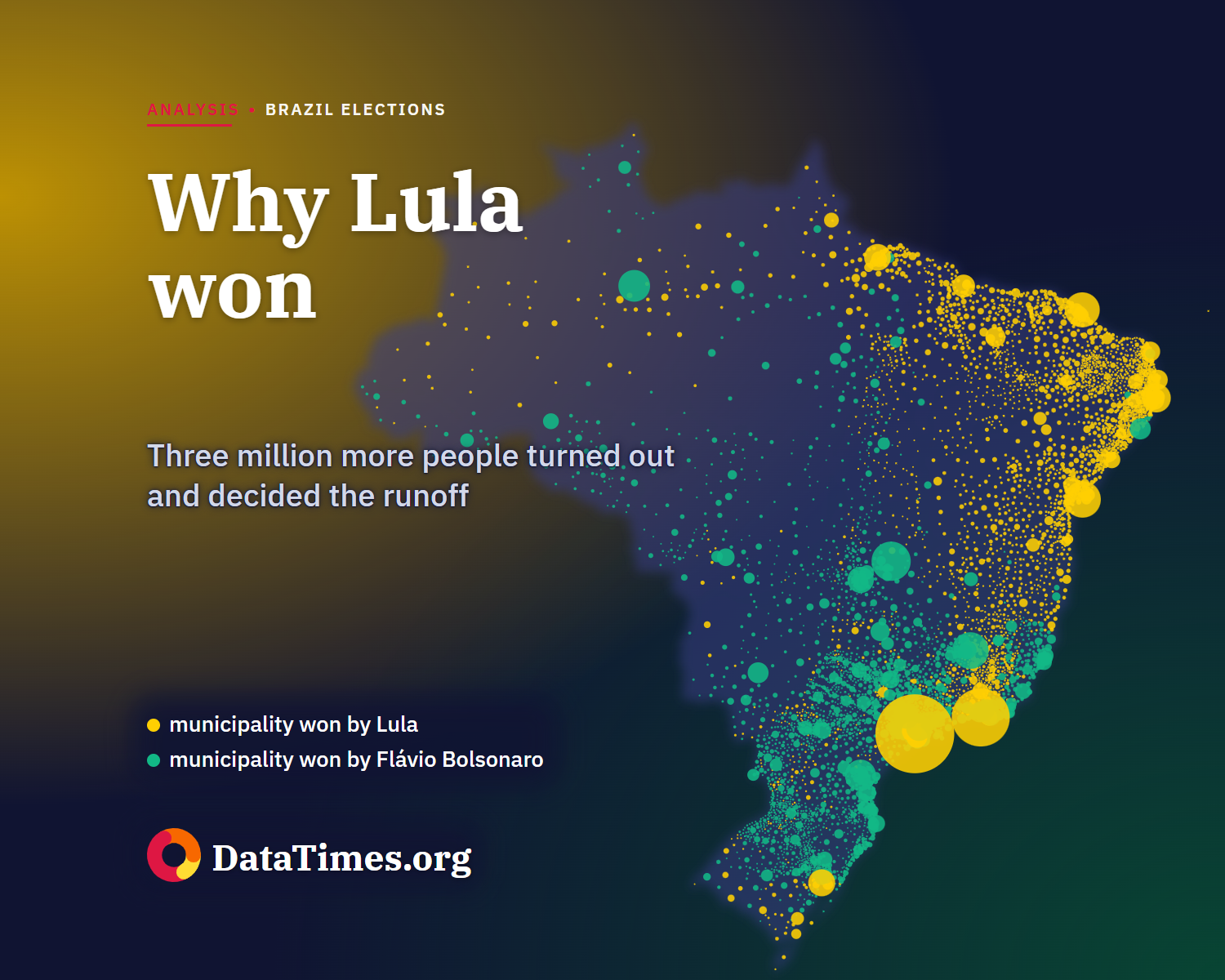
Flávio Bolsonaro won the first round, gained the backing of three defeated candidates and led in the polls. Yet Lula remains president. Between the two rounds he added 10.4 million votes, more than all the eliminated candidates received together in the first round. The outcome was decided by people who had not voted the first time or had cast an invalid ballot.
26 October 2026
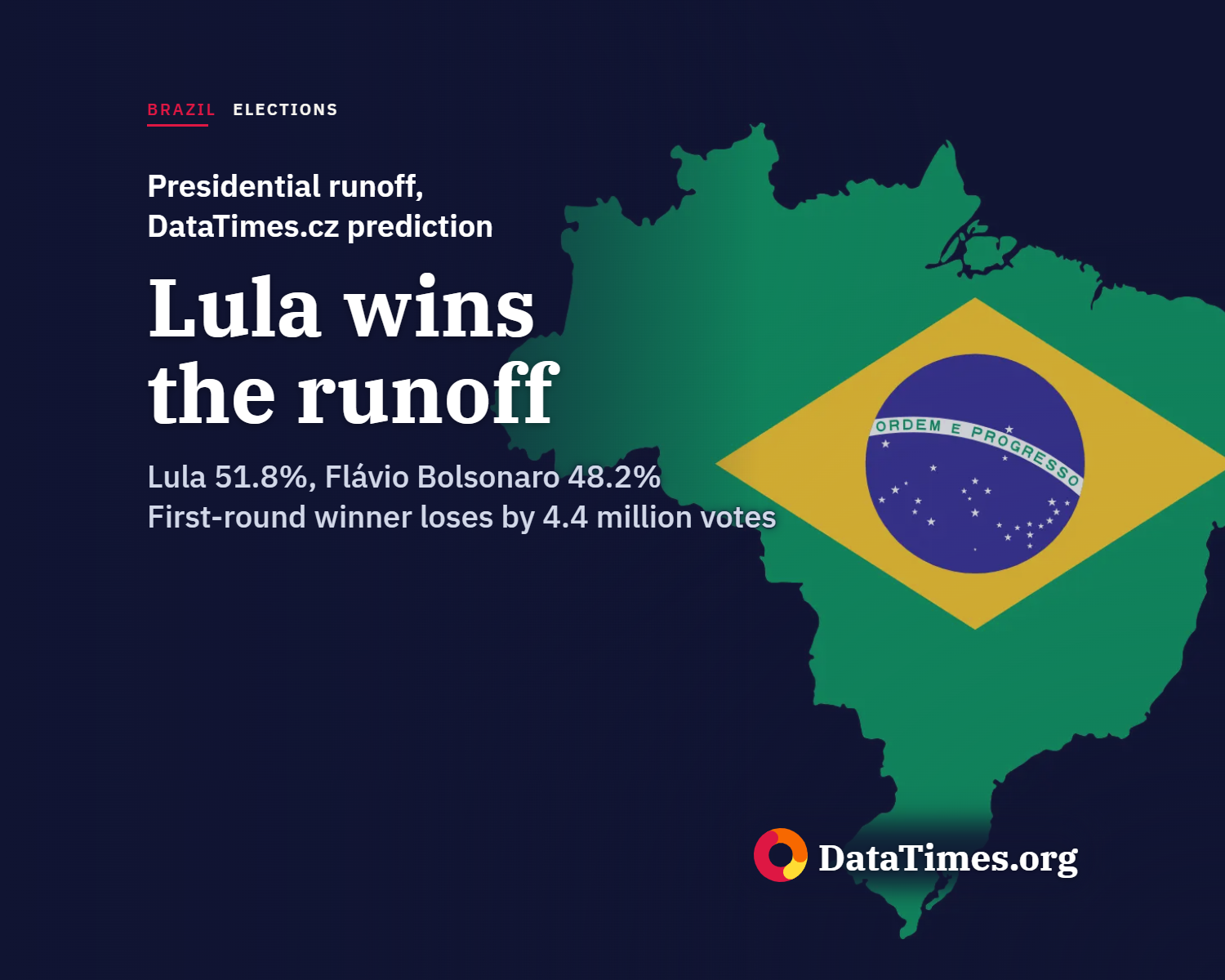
Polls before the runoff had Flávio Bolsonaro slightly ahead, and during the night the running count briefly put him in front of Lula. From the first minutes of the count, however, the DataTimes.cz prediction pointed to a win for the incumbent president: Lula will finish on 51.8 per cent and beat the son of his predecessor by more than four million votes.
25 October 2026
Context
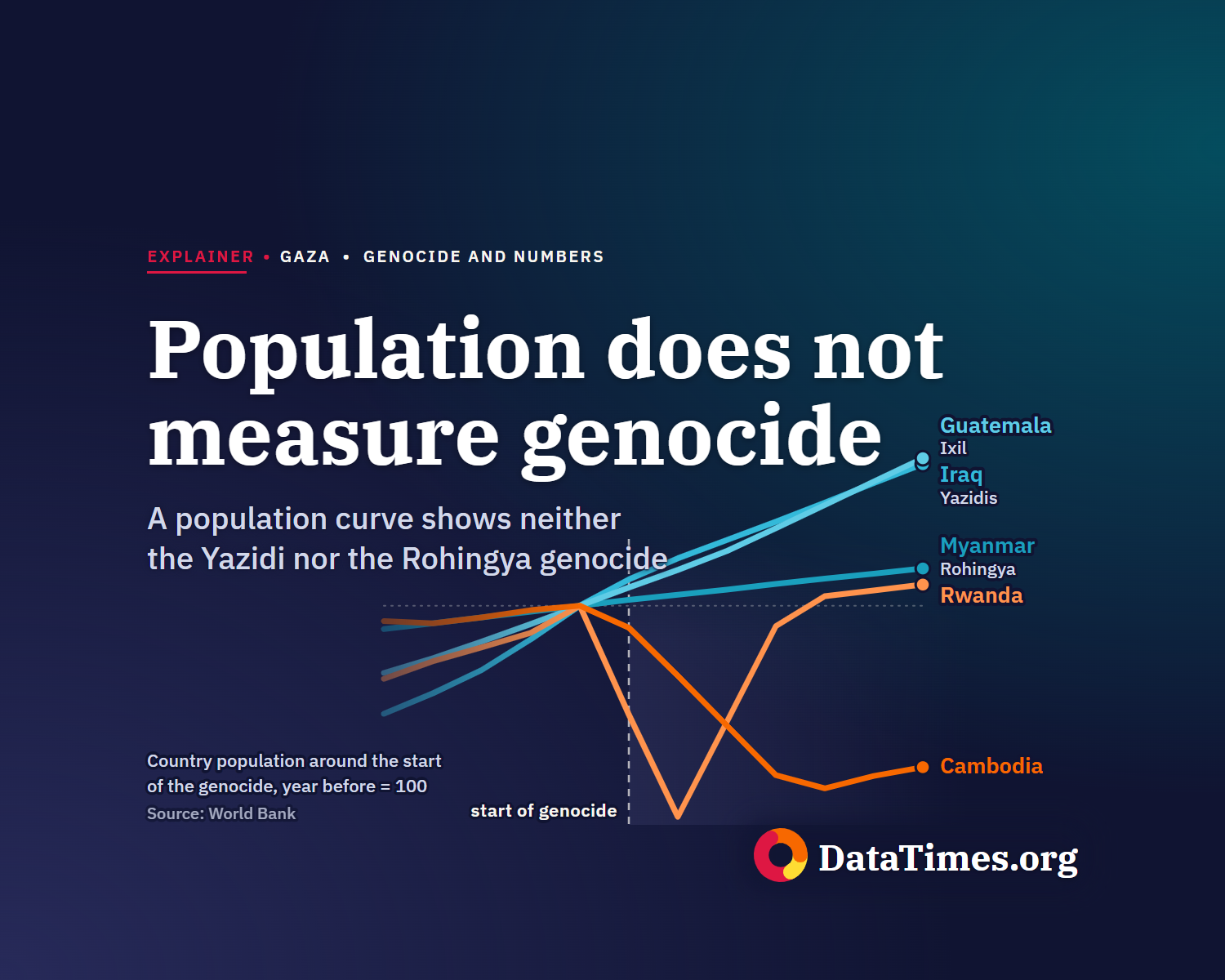
A chart is circulating on social media: in Cambodia, in Rwanda and among Jews during the Holocaust the population fell, in Gaza it grew, so there can be no genocide there. But the Genocide Convention does not ask about population size, the curve did not fall for the Yazidis, the Rohingya or the Ixil, and the chart's figures for Gaza are a pre-war projection. According to Palestinian statisticians, the population of Gaza has fallen. We explain what defines genocide and where the dispute over Gaza really stands. A four-panel chart is spreading on social media. In Cambodia in 1975–1979, in Rwanda in 1994 and for the world's Jewish population during the Holocaust, the population curve falls steeply, and above each drop sits a red box labelled "genocide". In the fourth panel, Gaza 2000–2025, the line rises to 2.2 million, with a large yellow "NO GENOCIDE" across it. The argument: where the population is growing, there cannot be a genocide. The chart has three flaws. It measures something the legal definition of genocide does not take into account. It leaves out recognised genocides during which the population kept growing. And its wartime figures for Gaza are not measurements but a pre-war projection: according to estimates by the Palestinian Central Bureau of Statistics (PCBS), the population of Gaza has fallen during the war. We were unable to trace who created the chart. The same argument, however, was already debunked in December 2024 by the Australian newsroom AAP FactCheck and the US website PolitiFact. Genocide is defined by the 1948 Convention on the Prevention and Punishment of the Crime of Genocide, which Czechoslovakia adopted in 1951. Under its Article II, genocide means acts "committed with intent to destroy, in whole or in part, a national, ethnical, racial or religious group, as such". The Convention lists five such acts: killing members of the group, causing serious bodily or mental harm, inflicting on the group conditions of life calculated to bring about its physical destruction, imposing measures intended to prevent births, and forcibly transferring children to another group.
30 October 2026
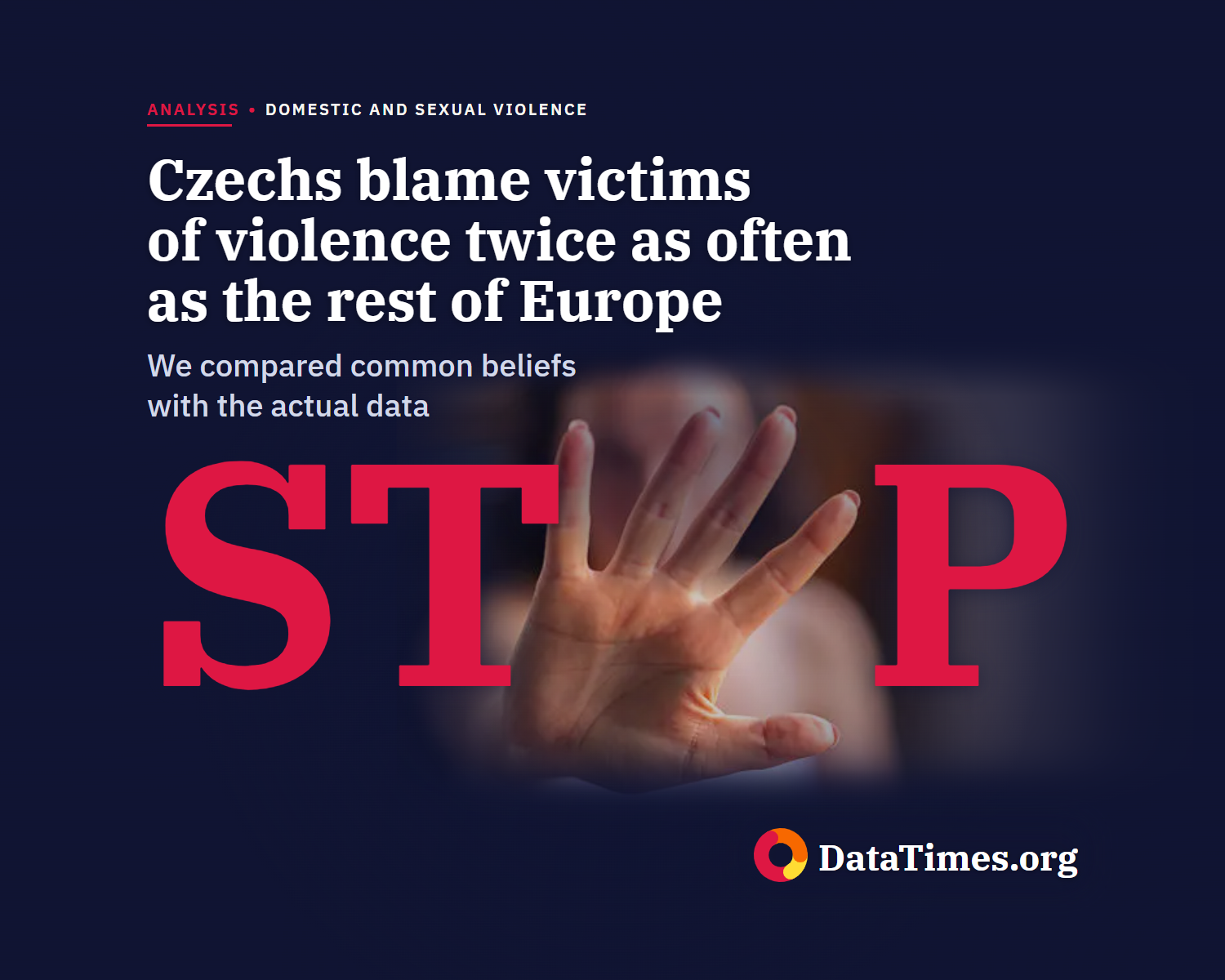
Thirty-two per cent of Czechs believe that a woman who was drunk is at least partly to blame for sexual violence, twice the European Union average. We took the statements from a bingo card circulating on social media and set them against data, research and the law.
21 October 2026
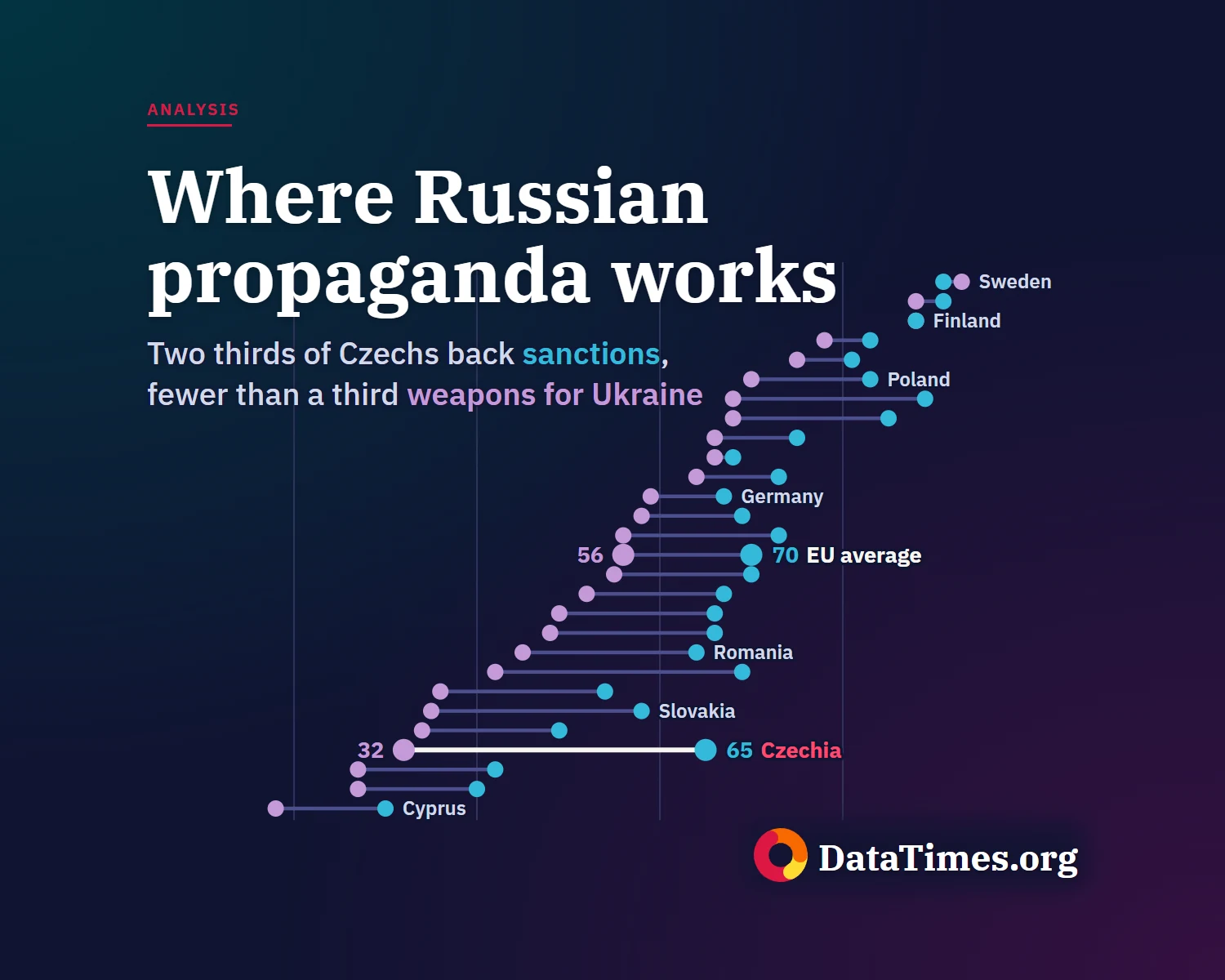
Where society is least resilient to disinformation according to the Media Literacy Index 2026, people hold the most favourable view of Russia according to Eurobarometer. Two thirds of Czechs support sanctions against Russia, but fewer than a third support weapons for Ukraine. In Slovakia, roughly half of people adopt the Kremlin's account of the war, yet only a fifth to a quarter want to leave the European Union and NATO.
28 September 2026
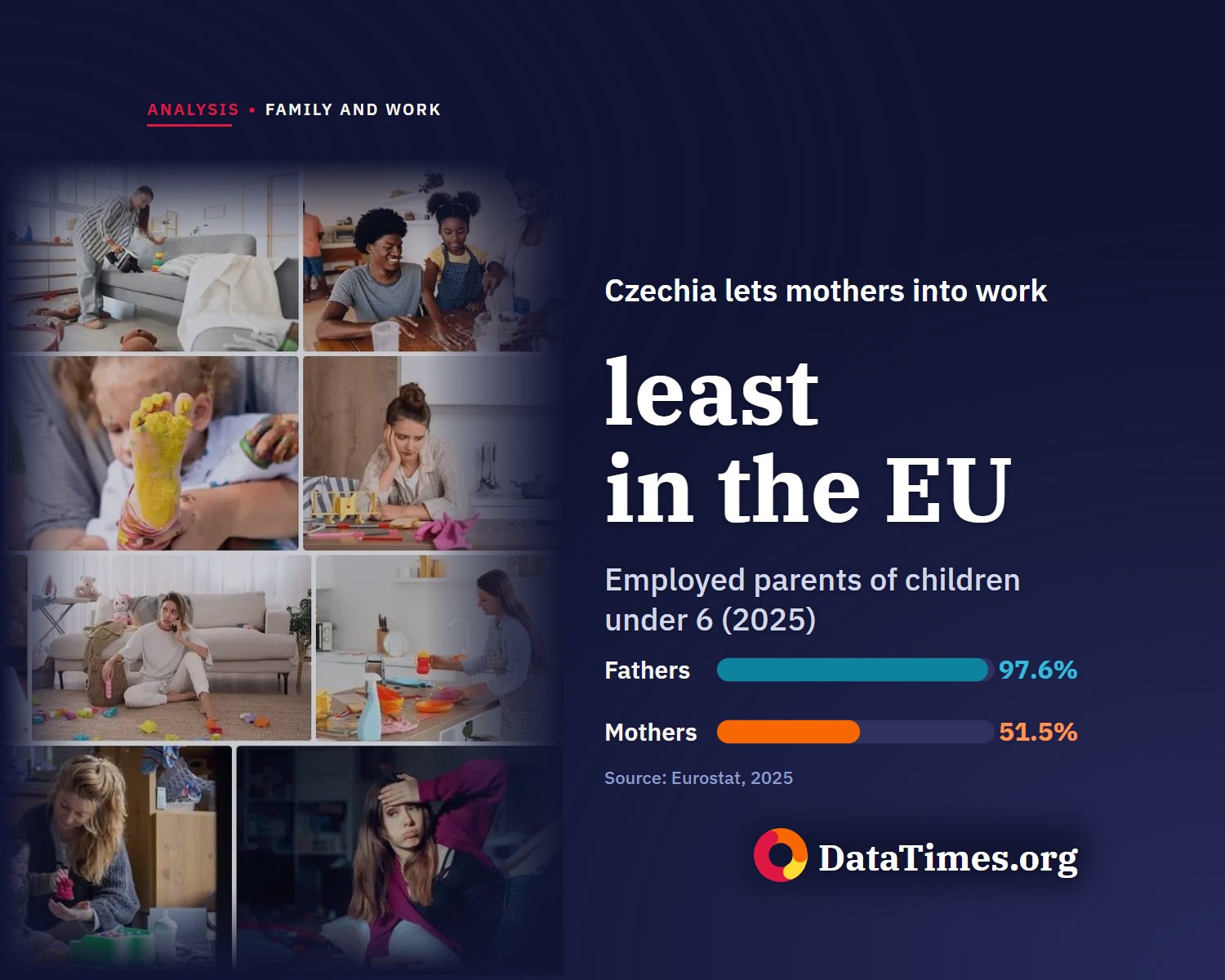
Fathers of children under six are in paid work more often in Czechia than anywhere else in the European Union; mothers, together with those in Romania, least often. The 46-percentage-point gap is unmatched in the EU. Mothers do want to work: once their child starts school, Czech women are employed more often than anywhere else in Europe. At a round table in the Chamber of Deputies, experts agreed that what keeps them out of the labour market is a lack of nurseries, a lack of part-time jobs and fathers who do not take parental leave. From January 2027, the government is raising the parental allowance to CZK 400,000.
23 September 2026